
Abigail Bissell
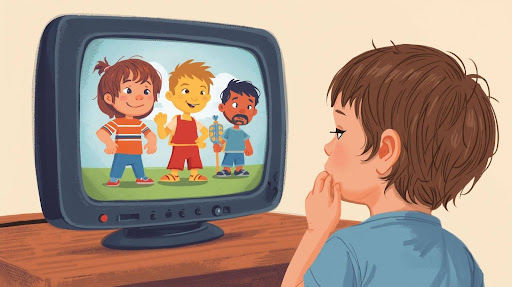
Cartoons can be very postive for young children to watch, but they can also show them behaviors that are not acceptable.
Cartoons do more than entertain; they help shape how children see the world. Some shows teach positive lessons, while others can send the wrong message and influence children in ways parents might not always expect.
Psychology teacher Kayleigh Taylor points out that cartoons can both help and confuse kids. “Sometimes it can give them a good social aspect of how the world is and how we interact, but it can also give them a very false understanding of how this works,” Taylor said.
Cartoons can teach good social skills, but they can also show behavior that is unacceptable in the real world. Children might get the wrong idea if the character faces no consequences for their actions.
“Some cartoons teach lessons to the kid [like] the power of friendship and sharing,” senior Adela Bissell said. “[However], some things are shown as normal in cartoons when they’re not [acceptable] in real life.”
While cartoons often teach children good habits, they can also pick up bad behavior from the characters.
“I think they pick up mostly positive traits…They want to act like their favorite character, and the majority of the time, the favorite character is good,” junior Kinleigh Williams said. “But there are also times in shows where they depict the character being bad, [which might affect how kids act in real life].”
When it comes to creativity, certain cartoons can help children think critically. Shows such as “Blue’s Clues” and “Dora the Explorer” give children a chance to think logically about a question before the answer is given.
“It allows them to do a little bit of critical thinking on their own,” Taylor said.
In today’s world, the variety of cartoons available is much different from that of the past.
“The amount of cartoons that are present now…is way more limited than the amount of cartoons that were available back in my day,” Taylor said.
Many modern cartoons seem primarily focused on simply entertaining their audience.
“A lot of shows today are made up [with] no purpose,” Williams said. She remembers that older cartoons had actual lessons that helped children learn about the world.
For parents and teachers, it is important to talk to their children and students about what they are watching.
“Just ask them what they’re getting from it,” Taylor said. This way, adults can help children understand what they are learning and whether or not it is a good lesson to take away.
In the end, cartoons can teach children a lot about life, creativity and social skills. However, without guidance, children might get the wrong idea or misunderstand the lessons.“We should be teaching them the right things, because at the end of the day, it’s their understanding of the world around them,” Bissell said.