






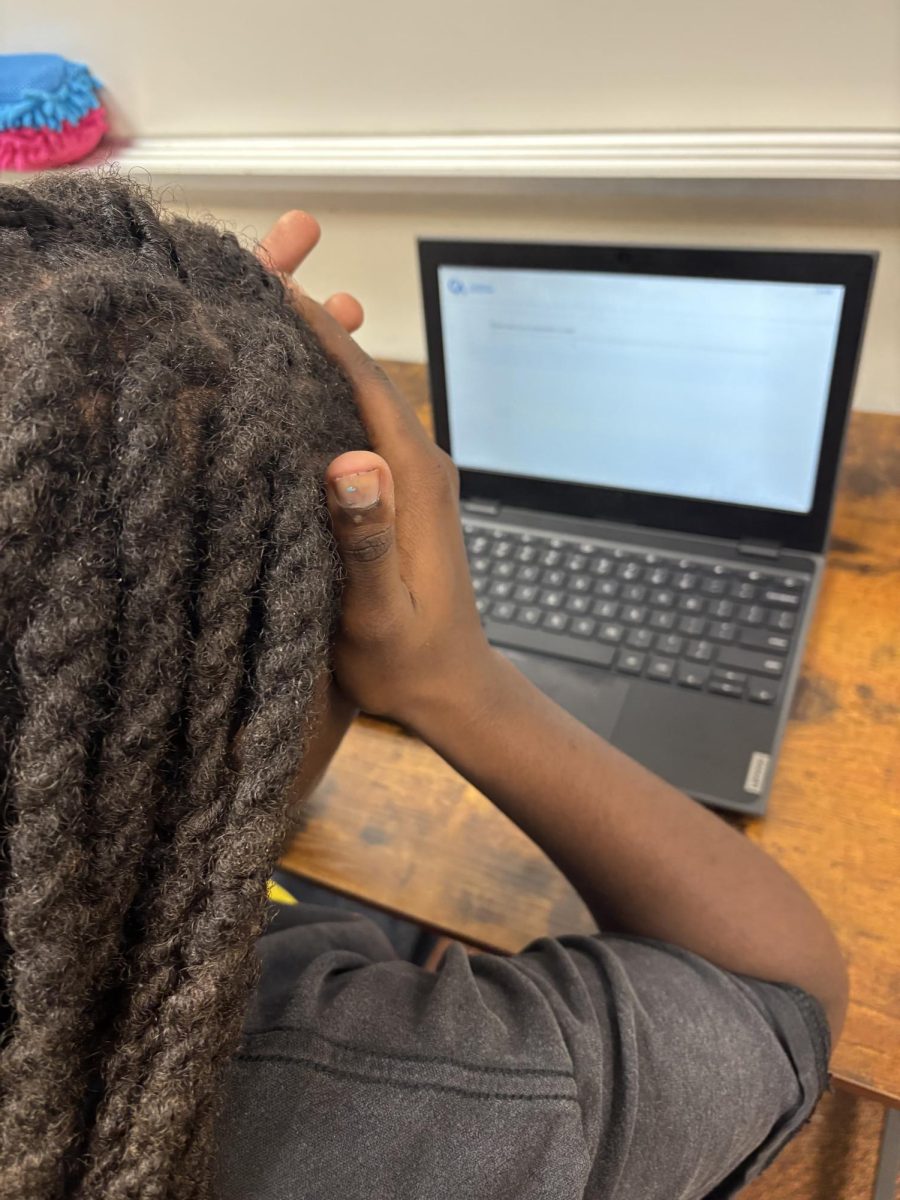


The addition of the AP Capstone curriculum this year has opened numerous doors for Florida High students. From sociological surveys to technological experiments, students are exploring their interests at a college level and immersing themselves in the world of academic investigation through AP Seminar and Research.
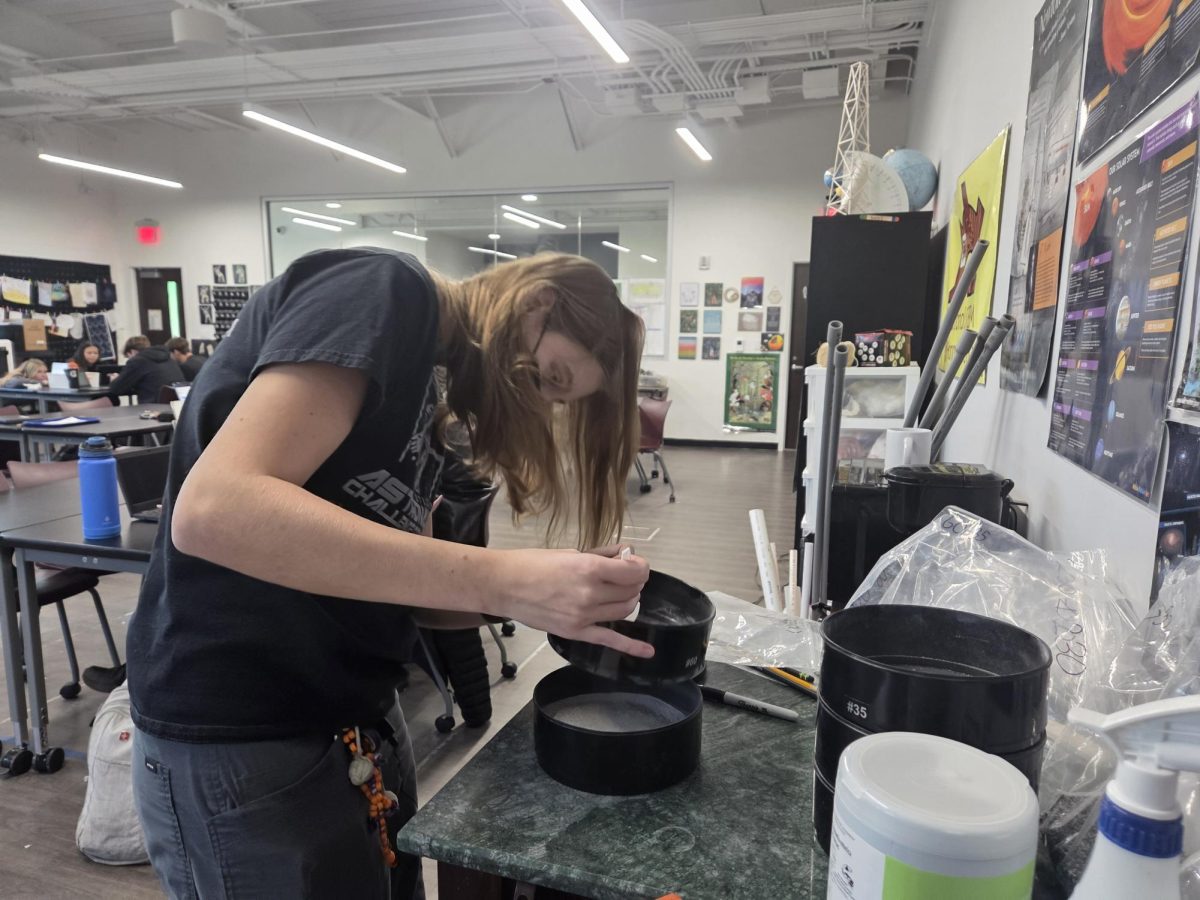
For instance, in AP Research, junior Max Pepper is building a mechanism to assist blind people in navigating their daily lives. “My research project is about the creation of a virotactile wearable interface, which is a lot of words to basically say it is a creation that will communicate to you using vibrations and your sense of touch. Its job is to see for a blind person,” Pepper said.
After reviewing peer-reviewed literature and academic journal articles, AP Research students are now moving on to designing their own experiments. This hands-on experience provides students with novel opportunities and skills that they otherwise would not have.
“My favorite part would probably be the design part, just figuring out what parts would go together, how it would function and even just figuring out efficiencies…because I’m able to take my design and repeatedly improve it,” Pepper said. “I learned how to solder. I did burn myself doing that, but it’s fine…Since I’m going into biomedical engineering, this is exactly what I need to do [for college]. This will help me when I do my dissertation later on, plus just [give me] more experience in actually creating things.”

In AP Seminar, students are learning how to navigate the vast landscape of academic and professional research. Students navigate databases, evaluate the credibility of certain sources and organize their analyses into presentations and papers to summarize their findings.
Junior Maria Rabbath is interested in the sociocultural and psychological aspects of world issues, which helped her find a topic to explore in AP Seminar. “My research project is basically about the extent of long-term recoveries in psychiatric hospitals and how they get affected by social issues…and basically about racial factors because of the way society treats certain races,” Rabbath said.
Both AP Seminar and Research provide students with the freedom to pursue their passions and investigate what piques their interests. While these courses have lots of wiggle room, they are still structured to address a problem or gap in knowledge in academic fields. For AP Seminar, students must identify a solution to the issues they are researching.
“I talked about solutions called PSIs, which are peer support interventions. They are kind of like peers who help you with your experiences. It’s like therapy, but it’s with people who have similar issues as you, so it’s someone you can relate to and feel comfortable with,” Rabbath said. “I’m interested in just doing research about more psychological stuff because that is one of my interests, so I’m glad I had that freedom to do that research.”
Since this is Florida High’s first year offering the AP Capstone pathway, it is a learning experience for both students and teachers, with novel discoveries being made on both ends of the classroom.
“What I’ve learned the most is that I should do less in terms of trying to guide students towards a specific project, because some of these projects I couldn’t have imagined coming up with,” AP Research teacher Dr. Haley Mehta said. “The things that excite people and the things that give people a passion to dig in and research and work on these big projects are really something that you wouldn’t necessarily expect. Everybody has their own kind of passion project. Everyone has their own reasons for asking questions.”
In a typical AP Capstone route, students take Seminar first in order to equip them with the proper skills to succeed in AP Research. Similarly, going down this route in high school prepares students for higher education in a way distinct from how prior AP courses did.
“I’ve learned just how many college-level skills you don’t typically embed at the high school level. I don’t think I saw an academic journal until I went to grad school or maybe late into my undergrad degree, but this class is built around being able to access and understand academic journals and being able to…formulate complex thoughts and thesis statements,” AP Seminar teacher Lee Cameron said. “We don’t always realize how many of those skills we don’t target before we send an AP-level student to college without that full toolbox.”
Another unique feature of these classes is the peer-to-peer interactions, as students rely on each other to review and improve their work rather than the teacher. This is meant to mimic the peer review step of the research process.
“One of my favorite moments was during our midterm. Students had to defend their proposals for their research projects and had a question-and-answer period where other students from the class asked questions,” Dr. Mehta said. “It was really cool to me because the questions that students were asking each other were exactly the questions that I also would have been asking, and so I think that the class as a whole really understands the research process and can think critically about all of the steps.”
At the end of this journey, AP Capstone students will record their presentations and submit their research papers to the College Board to be scored. Regardless of the result, the experience of being in these classrooms has prepared students for higher education and more rigorous academia.
“I am so impressed by the students in this class. They’re beginning to see themselves as researchers and to think of themselves as an authority on the topic that they are researching,” Dr. Mehta said.