


















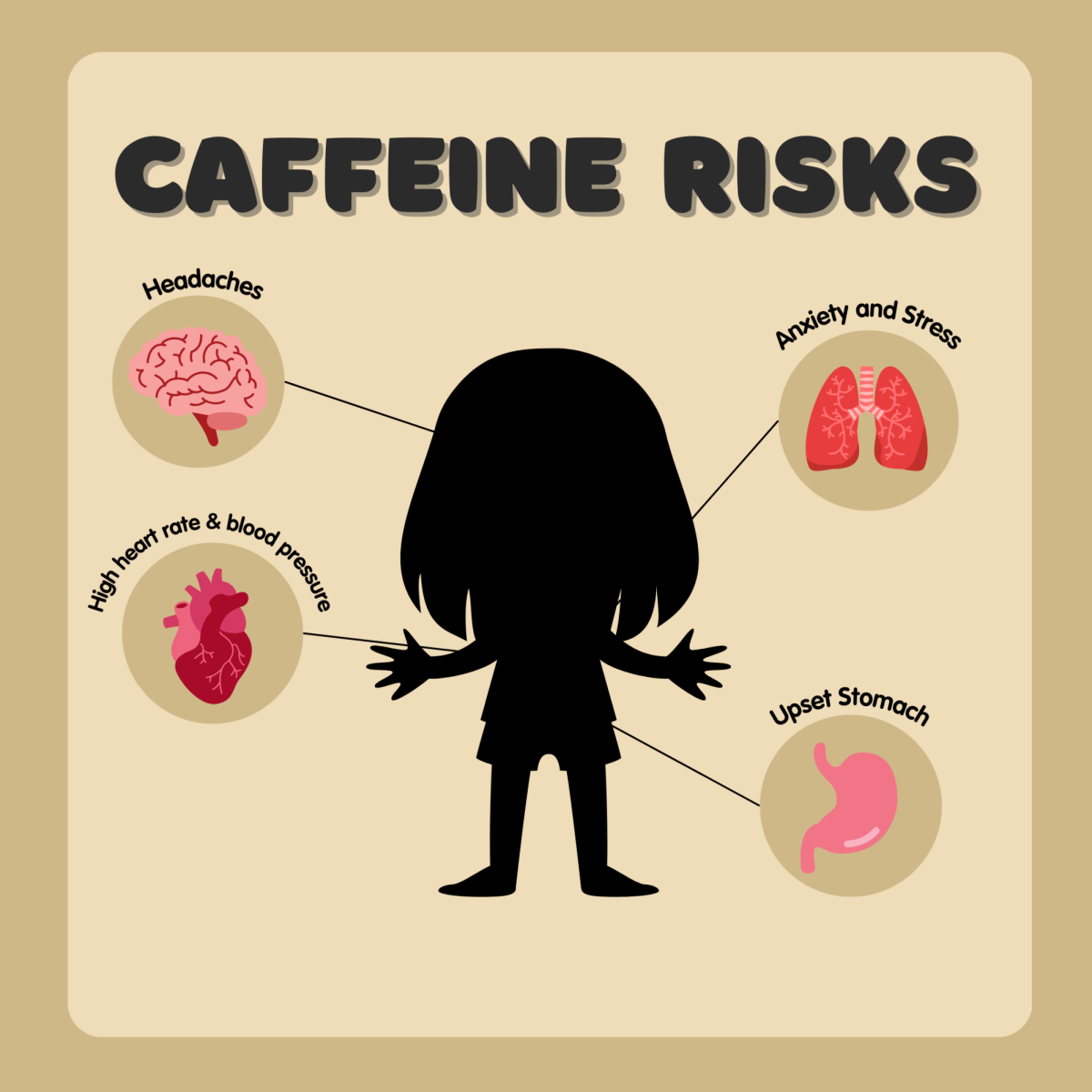
As many people love caffeine and drink it every day, it can pose risks and safety concerns that can affect their health. Increased caffeine consumption can lead to symptoms such as increased heart rate, blood pressure and dehydration.
Caffeine can cause health problems in your body as well as in your overall lifestyle. A healthy lifestyle includes a controlled amount of caffeine and a good diet with enough sleep. On the other hand, an excessive amount of caffeine and food without enough sleep can diminish your health and increase the risk of diseases. As a result, it can lead to poor academic performance and mental health.
“Our bodies aren’t meant for caffeine, especially for teenagers. It can affect one’s sleep because it requires you to stay up, which leads to poor academic performance because of exhaustion,” freshman Kaiden Jenkins said. “Additionally, our mental health declines because we’re so dependent on caffeine, [relying on it] to function throughout the day.”
“The American Academy of Pediatrics recommends not having more than 100 mg of caffeine per day. There are 65 mg in a can of soda. Caffeine causes all kinds of mental health issues with anxiety, depression, difficulty concentrating, abnormal heartbeats and cardiac risks,” Florida High nurse Allison Westphal said. “It definitely affects sleep, too. Kids need to have at least nine to 11 hours of sleep per night to be able to function.”
Drinking caffeine daily can lead to addiction and dependency. This can evolve to needing caffeine in your body in order to get through the day. Additionally, consuming a lot of caffeine every day can increase the chances of a heart attack.
“Caffeine is a great way to boost your energy, but excessive intake can increase the chances of dependence and negative effects on your body,” freshman Lindsey Bauer said.
Alternatives to caffeine, such as sunlight and a healthy diet, are healthier and more effective. These produce energy in a natural way by providing essential nutrients to the body. Caffeine is only a temporary source of energy, and it requires repetitive intake in order to work.
“One alternative to energy is music because it gets me pumped up before a soccer game,” freshman Elise Howard said. “I also like exercise because it’s a natural source of energy that lasts longer than caffeine.”
Educating students to learn about the risks is important because caffeine affects our central nervous system by making us more alert and energetic. Many people often overlook the negative impacts it has.
“As a school nurse, it is my role to educate students about what’s best for them and what’s safest, and I try to do that frequently. I send out newsletters to parents, and I do things on the morning announcements and anytime we have events to make sure kids know the risks of caffeine,” Westphal said.
Part of what makes caffeine such a popular choice for boosting energy is how accessible it is. However, it has downsides such as health risks. Education is crucial, especially for teenagers, because many people underestimate caffeine and its potential harm.