




















Color psychology studies how colors can affect emotions and behavior, which has become an important tool in classroom design. Whether it is the shade of the walls, the brightness of a poster, or even the color of a classmate’s outfit, colors influence how students feel, focus and behave throughout the day.
Both students and teachers say that certain colors make learning environments more comfortable and engaging.
“I think different colors make me happy, [while] some make me sad,” freshman Kaylee Roberts said. “When I see pink or yellow, it makes me happier.” Kaylee also mentioned how certain colors helped her focus. “When we got my dog, her collar was yellow. So yellow helps me stay calm and focused.”
Teachers often use color to influence their students’ behavior, support students emotionally and push them in the right direction.
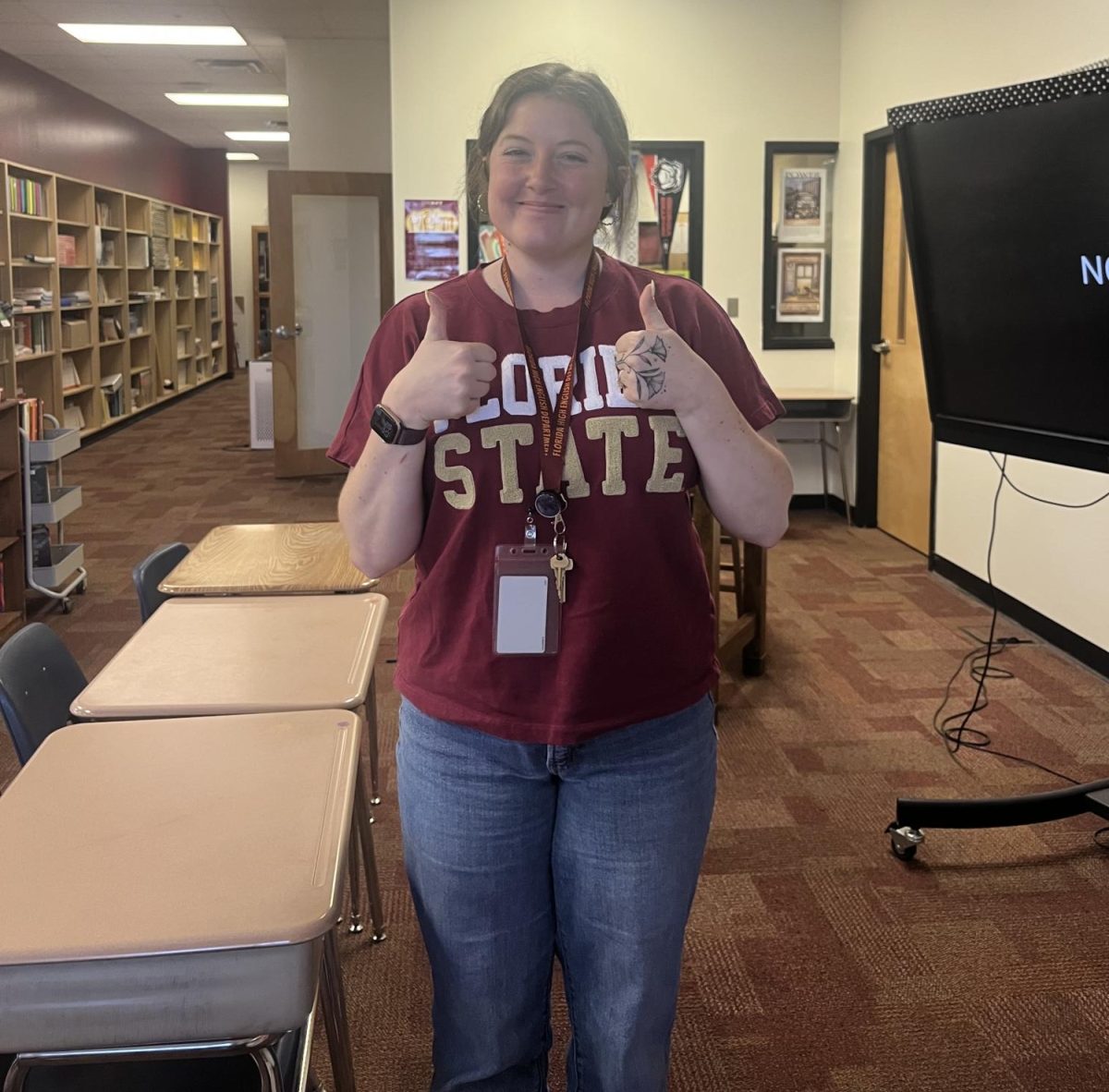
“I think color plays into our moods and every aspect of our lives,” psychology teacher Kayleigh Taylor said. “It can help brighten our day. It can also bring our moods down.”
Taylor explained how universal colors like red, yellow and green can be used to reinforce classroom expectations.
“If you just say ‘green light, great job,’ they associate it with great behavior. Red means stop, and they get that instantly,” Taylor said.
Colors not only impact behavior; they also help students stay focused. It can even help students concentrate when studying.
“Green helps me focus a lot, and it also helps me recall what I studied for tests,” junior Kinleigh Williams said.
While bright colors like yellow, pink and green were often mentioned as being energizing or calming shades, students also agreed that balance is key.
“I like gray, but [only] certain shades of gray,” Roberts said. “A dark gray like charcoal looks boring and makes [me] feel down.”
Both teachers and students feel that color connects to their identity, school spirit and creativity. Williams noted that schools often use darker uniforms for formality, while brighter colors might encourage more enthusiasm. She also mentioned how color coding can help students stay organized and productive.
“Some people like to color chart their day, like this is a specific class I have to go to [on a specific day],” Williams said.
Color is not just about what looks good; it can affect everything from mood and memory to creativity and focus. In the classroom, the right mix of color can support student success, improve behavior and make learning more personal and engaging.
“People’s personalities come through color. It reflects on others,” Taylor said. “That’s why it matters.”