
















As technology has pushed its way to the forefront of education in recent years, Artificial Intelligence (AI) has become increasingly prevalent in academic environments. While some see it as a useful tool, others say the drawbacks it comes with exceed the benefits, and students and teachers alike have differing opinions.
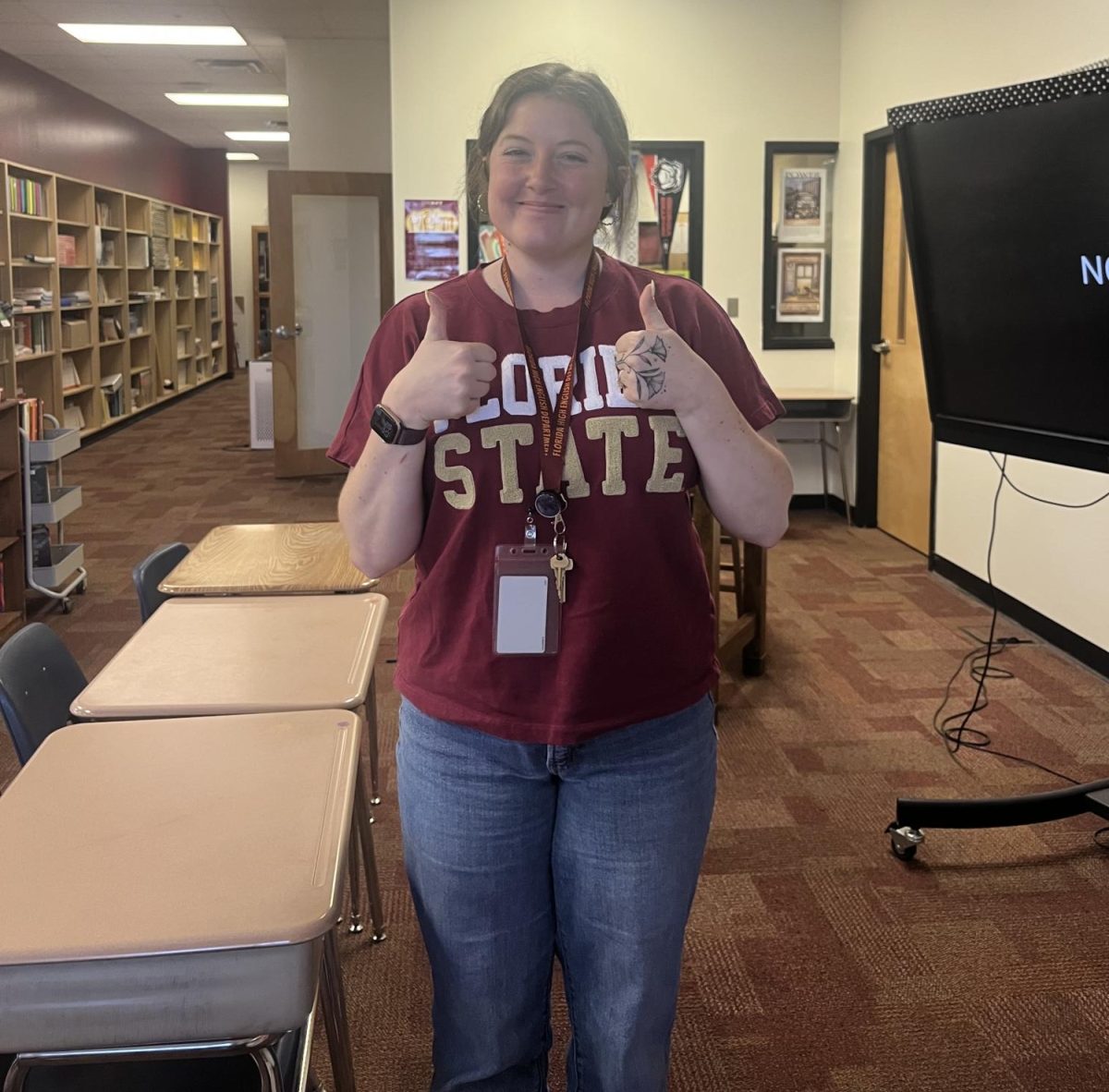
Many students on campus use AI to aid them when doing schoolwork. While some fully embrace this fairly recent advancement, several of their peers have concerns about whether this technology truly is as helpful as it’s being made out to be. Senior Eva Helms says that she’s noticed her peers becoming dependent on these AI tools.
“I believe it can be helpful for studying, but at the same time I really don’t think you have to use it for school. People have been [without] it for years, and they’ve been just fine.” Helms said. She also fears that it has hindered the drive to learn and explore in the classroom. “I have, in the past, used [AI for school]. For example, I’d use it when I had Latin as a last resort. And I feel like that limited my learning and wanting to learn Latin, and gave me a cheap way of figuring out what it said instead of using my brain or other sources to figure it out. I believe it has restricted my ability to grow.”
Classroom educators seem to have similar concerns about the effects AI has had on their students.
High school English Teacher Lee Cameron says, “I’ve seen them become more reluctant to write. Like ‘If I drag my feet now, maybe I can do this a different way later.’”
Teachers have also taken notice of their students’ differing views on using AI for schoolwork.
“I think they love it,” Cameron said, “but I think they’re also aware that it’s not great work. They see it’s undercutting things, but it’s like asking a 4-year-old to only eat one cookie and then leaving the room.”
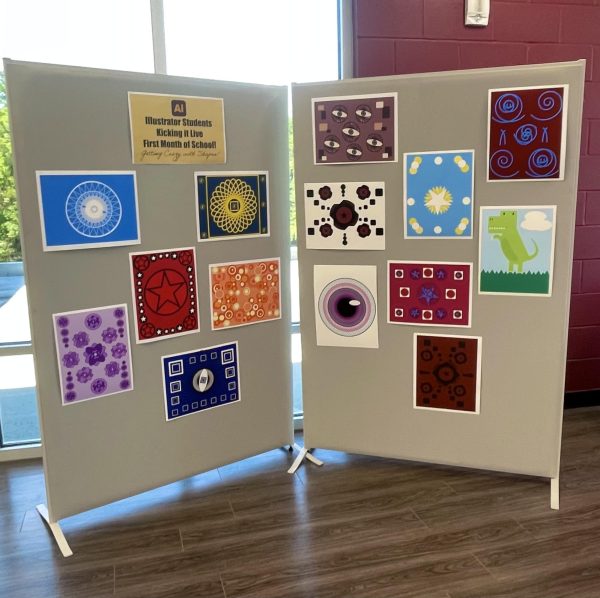
Commercial Tech. Art teacher Michelle Hartsfield, who recently did a research project centered around AI in schools, explains a different side of the story.
“From what we’ve done in my own classes, I’ve appreciated the fact that my own students don’t want to see AI integrated too much into the graphic design classroom just because of the authenticity of the art itself and the creativity,” Hartsfield explains. “I did some research with my advanced students to try and see what it would look like to use AI to try and create a jazz poster for Black History Month. That’s where I was able to get the students’ perceptions of how they don’t want to see it integrated into the arts. It was an interesting exploration, and we’re going to do more with it this year to see how students get to those thoughts and what processes they go through to get their opinions on AI”
Artificial intelligence, in theory, is an advancement that benefits people and provides useful tools that can be a great help to us. However, when introduced to a classroom environment, the issue of whether students, and even staff, can be trusted to use it correctly is raised. As Hartsfield puts it, “It’s a tricky line to walk. To embrace the new things that are coming out and being able to use them, but then also avoiding the misuse of them as students and teachers if needed.”