
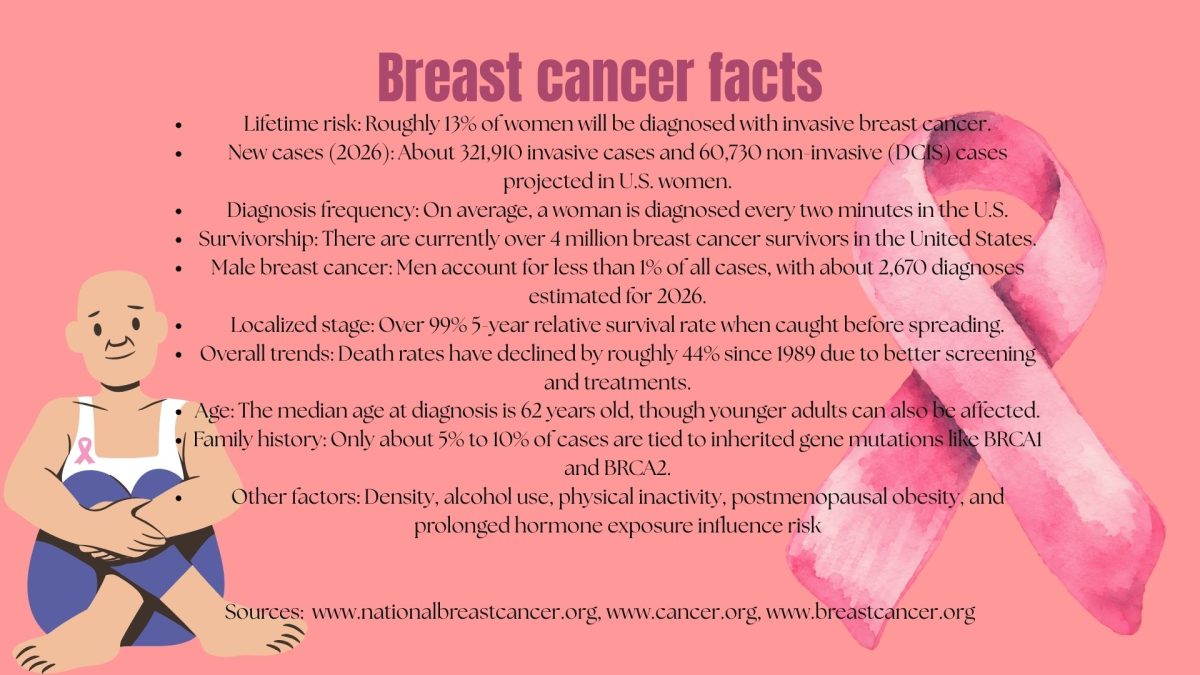








Breast Cancer Awareness Month, observed every October, is an annual campaign dedicated to educating the public about the importance of early detection, regular mammograms and the warning signs of breast cancer. The story highlights the critical impact of proactive health checks while honoring survivors and supporting families affected by the disease. It also focuses on local community efforts, fundraising initiatives, and ongoing medical advancements aimed at finding a cure. The biggest risk factors are getting older and having a family history of the disease, particularly through inherited genetic mutations like BRCA1 and BRCA2. Thanks to early detection and modern treatments such as surgery, chemotherapy, and radiation, survival rates have improved dramatically over the years, with the five-year survival rate for early-stage breast cancer now exceeding 99%.
While breast cancer remains a largely misunderstood illness in which many people struggle to understand, early detection through regular self-exams and mammograms can greatly increase the chances of successful treatment.
“Everyone should get checked, no matter if someone in their family had it or not,” Anatomy and Physiology teacher Avital McQuigg said.
While statistics and medical information help explain the impact of breast cancer, the disease is much more than numbers for some members of our school community. As part of this story, the authors share their own experiences with breast cancer and reflect on how the disease has affected their families and shaped their perspectives on awareness and early detection.
A Personal Journey Through My Mother’s Battle with Breast Cancer – Demi Gibson
Growing up with a front-row seat to my family’s battle with breast cancer has been one of the scariest and most defining experiences of my life. When my mother first began her silent struggle with the disease, an overwhelming sense of helplessness washed over our home; it truly felt as though there was nothing any of us could do except brace for impact. Watching her go through chemotherapy was devastating; seeing someone I love suffer so intensely, both physically and emotionally, was harder than words can describe.
Yet, as painful as it was to watch my mom fight, the terrifying reality of cancer wasn’t entirely new to me. My grandmother had also fought breast cancer years before. Even though her diagnosis was caught in its earlier stages, she still had to endure the arduous journey of surgeries and recovery, much like my mother. Seeing two generations of women in my family face the same daunting battle has left a deep mark on me, forever changing how I view strength, family and the power of resilience.
Remembering My Memaw: A Family’s Experience with Breast Cancer – Colbie Rushing
Breast cancer hit my family hard when my grandmother, Patricia Strickland, or “Memaw,” passed away; our family dynamic had changed. She had battled it years before, multiple times, and every time she overcame that disease. Near the end of her life, she was diagnosed again and was also struggling with scleroderma. When she got the news, she was scared to tell us because she knew this might be her last time. We spent her last few weeks celebrating her life.
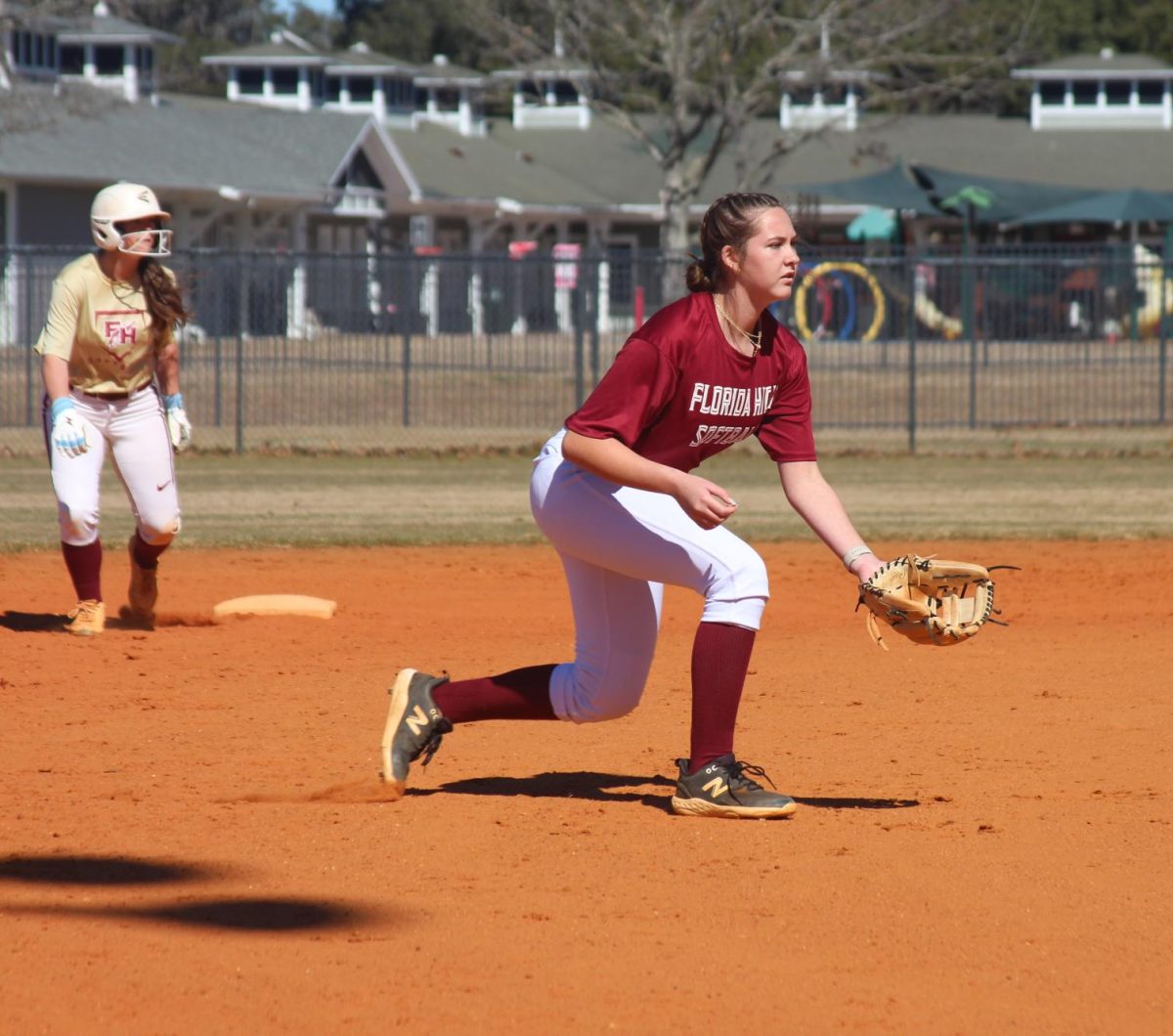
When she passed away, I was at softball practice; the news shocked me, but I had to keep playing for her. My mom immediately went and visited her. I believed in my heart that I would much rather remember her when she was healthy than see her sick in a bed, so I held onto old images of her. This affected how my mother saw her own life. My mom began getting checked regularly for breast cancer. When I turn 18, I want to start getting checked too. As a family, we want to protect ourselves and catch it before it’s too late. Honestly, losing my grandma made me realize how important family is. Sometimes I still think about her and wish things were different.
I try to talk to my mom more, and I think we’ve gotten closer because of everything. I remember the little things, like how my memaw always baked us cookies and let me and my little brother decorate them for Christmas. She even told us funny stories about my grandpa writing her letters when he was away in the military so many years ago. I want to make sure my family stays strong and doesn’t go through this again if we can help it.
Dispelling Myths and Raising Awareness
Although every family’s experience with breast cancer is different, education and awareness remain essential tools in the fight against the disease. Understanding the facts can help people make informed decisions about their health and support those affected by cancer.
The truth is, most breast cancer cases occur in individuals with no family history at all, which means everyone should be aware and proactive about their health. Another misconception is that only women can get breast cancer. While women are at a much higher risk, men can develop breast cancer too, even though it’s rare.
Additionally, some people think that finding a lump automatically means cancer. By doing research and spreading accurate information, people can reduce the stigma and fear around breast cancer, encourage early detection and support those who are affected by it.